
ABOUT

Jennifer Ligaya Senecal is a multidisciplinary artist born and raised in Chicago at the crossroads of Afro and Asian diaspora. Her work spans sound, movement, installation, film, and improvisational performance, and investigates the sensory, spiritual, and political legacies of place, particularly the American South. Rooted in womanist praxis and decolonial aesthetics, Ligaya’s practice unfolds through site-specific activations, collaborative rituals, and experimental archives.
A sponsored artist, grant recipient, and commissioned multimedia artist, her original work includes solo and collaborative performance compositions and sound installations that amplify critical liberatory practices, ancestral indigenous knowledge systems, and moments of communal healing, through the weaving of traditional and contemporary sound, performance, and personal ancestral folk arts practices.
Her work has been exhibited and performed across the U.S., including at Co-Prosperity Sphere, NYCH Gallery in Chicago, and Map360 in Montgomery, Alabama. She is the founder of SaltWater Road, a performance-based, artist-led residency that explores spiritual-senso-real sovereignty as health justice through embodied research.
Her current creative practice explores routes of return through the lens of Afro-Asian womanist subjectivity and speculative arts, indigenous healing and survival practices, and genealogies of anti-colonial spiritual-political resistance.
Ligaya is also a PhD candidate in Performance Studies, where her scholarship and artistry converge to develop new methods for understanding Southern epistemologies through the body.
More

SaltWater Road is a self-founded artist-run research-practice established to bring artists, scholars, and community together to explore ancestral memory, place, and sonic rituals in the American South. It is at once experimental residency, archive, ritual lab, and public practice. My dissertation research, teaching, and performance practice all feed into and emerge from SaltWater Road.
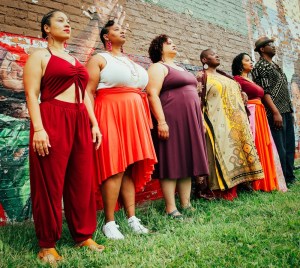
Following in the footsteps of cultural workers such as Zora Neale Hurston, Pearl Primus and Katherine Dunham, Honey Pot Performance forefronts African diasporic performance traditions. We draw upon a central notion found in performance studies, black feminist discourse and sociology: non-Western, everyday popular and/or folk forms of cultural performance are valuable sites of knowledge production and cultural capital for subjectivities that often exist outside of mainstream communities.

If something here stirs your spirit—if you hear a rhythm, feel a thread, sense a shared language—I invite you to reach out.
I am open to collaborations, commissions, conversations, rituals, workshops, lectures, and shared dreaming. Let’s see what we might build together
 Jennifer Ligaya